Turning agricultural waste into the world's next sustainable material
Every year, millions of tons of rice straw (parali) are treated as waste and burned in open fields. At the same time, plastic packaging chokes rivers, oceans, and our own bloodstreams. Carbon Negative exists to solve both crises together — through one circular value chain.
Waste into value.
Pollution with opportunity.
An industry that benefits everyone.
Crop residue burning is a systemic problem — not an individual one.
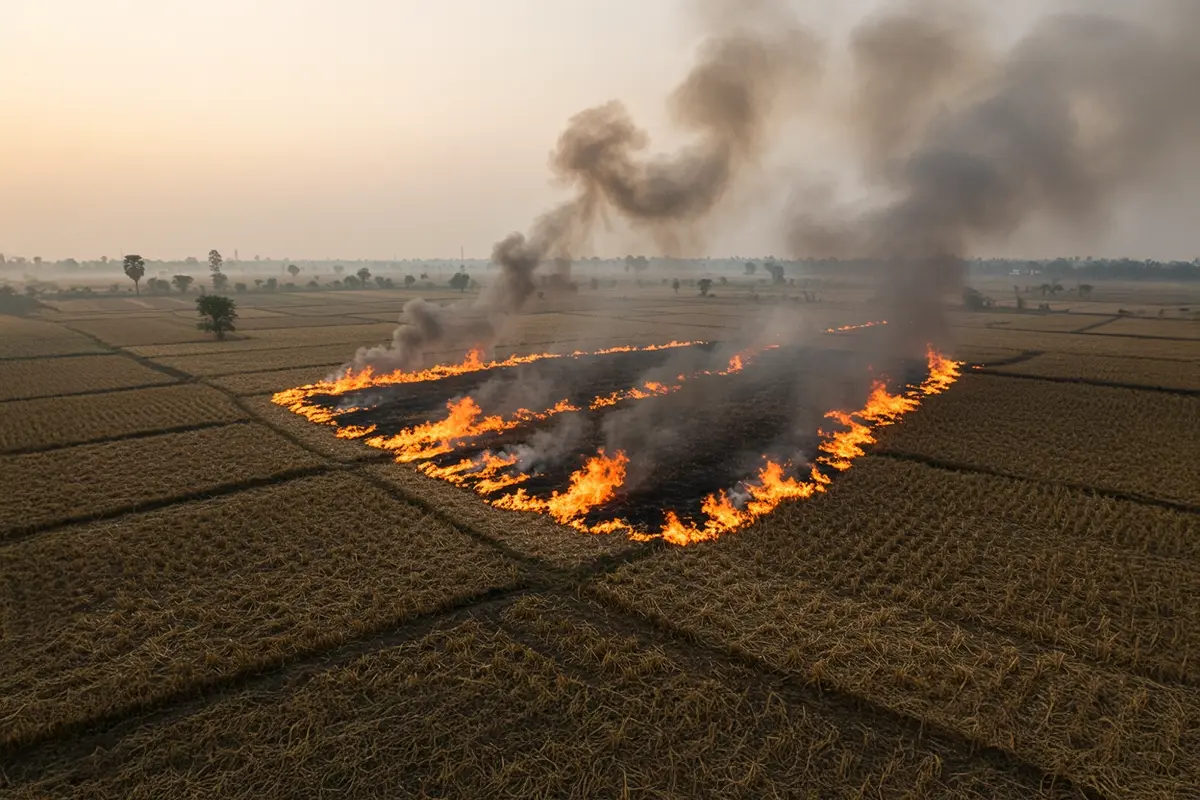
Unlike wheat straw, rice straw has limited commercial demand. Removing it manually is expensive. Transporting it is difficult. Keeping it on the field delays the next crop.
Because wheat must be planted within a very short time window, farmers often have no practical option except burning the residue. It is not because they want to pollute — it is because the existing system gives them no economically viable alternative.
- No guaranteed buyer
- No reliable collection network
- Very little time between crops
- High labour costs
- Transportation expenses
- Limited storage facilities
- Low profit margins
A sustainable solution must make straw more valuable than burning it.
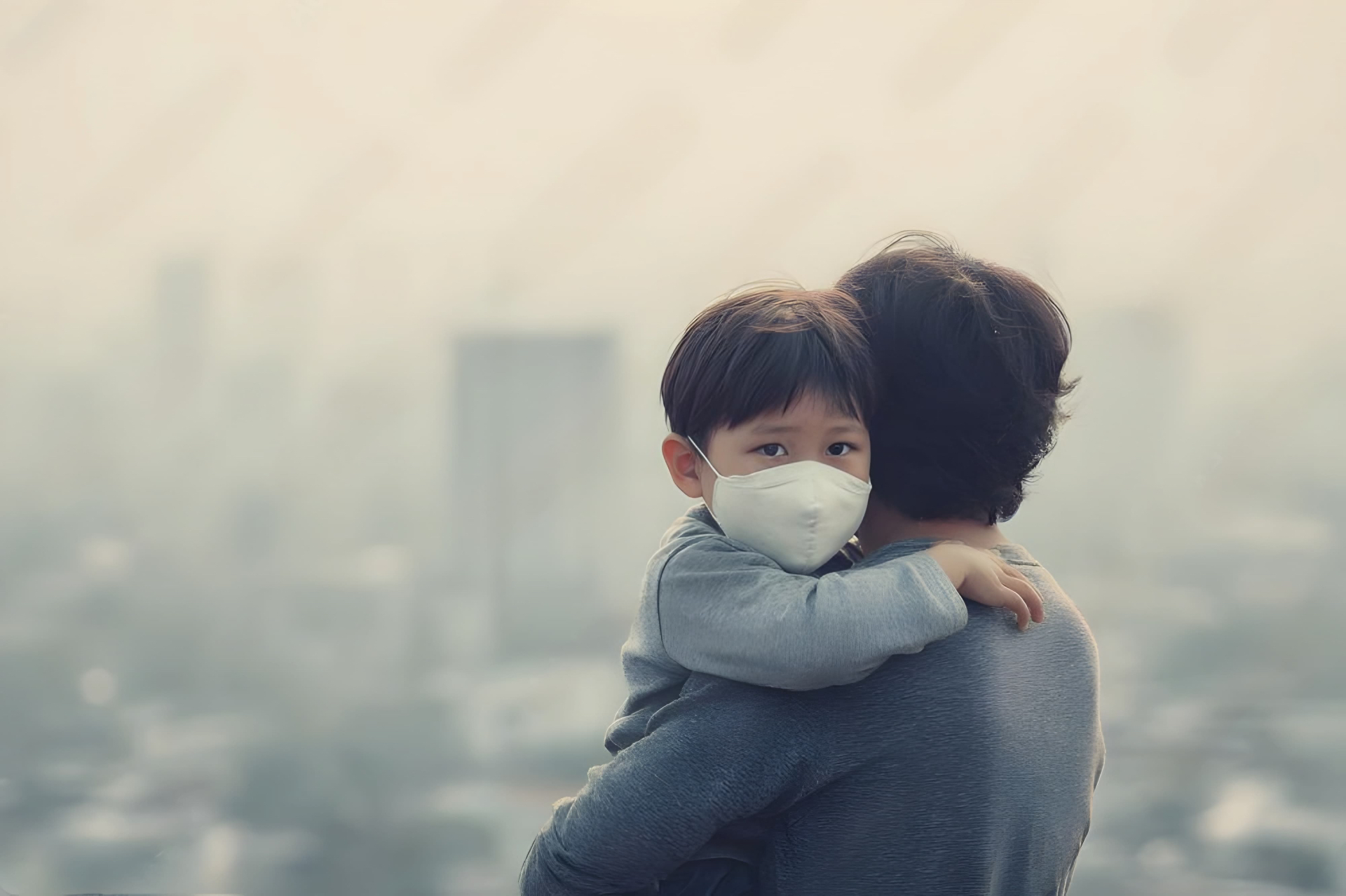
The smoke becomes everyone's problem.
People who have never visited a farm still experience the consequences.
Children breathe toxic air
Elderly struggle with asthma & heart disease
Hospitals see respiratory surges
Flights are delayed
Roads become dangerous
Outdoor work turns hazardous
Schools temporarily close
Businesses lose productivity
Tourism suffers
Millions stay indoors
Air quality collapses
Public health costs soar
Bans alone cannot eliminate seasonal smoke
Delhi regularly experiences some of the worst air quality levels in the world during winter. Governments have layered dozens of measures — from BS-VI standards to smog towers — yet severe pollution recurs because the root cause has not been addressed at sufficient scale.
The solution must create economic value for the straw before it reaches the field fire.
Most solutions burn the biomass again.
Biomass pellets, bio-CNG, and co-firing reduce open burning — an important step — but the material's highest value is lost. The straw simply becomes fuel.
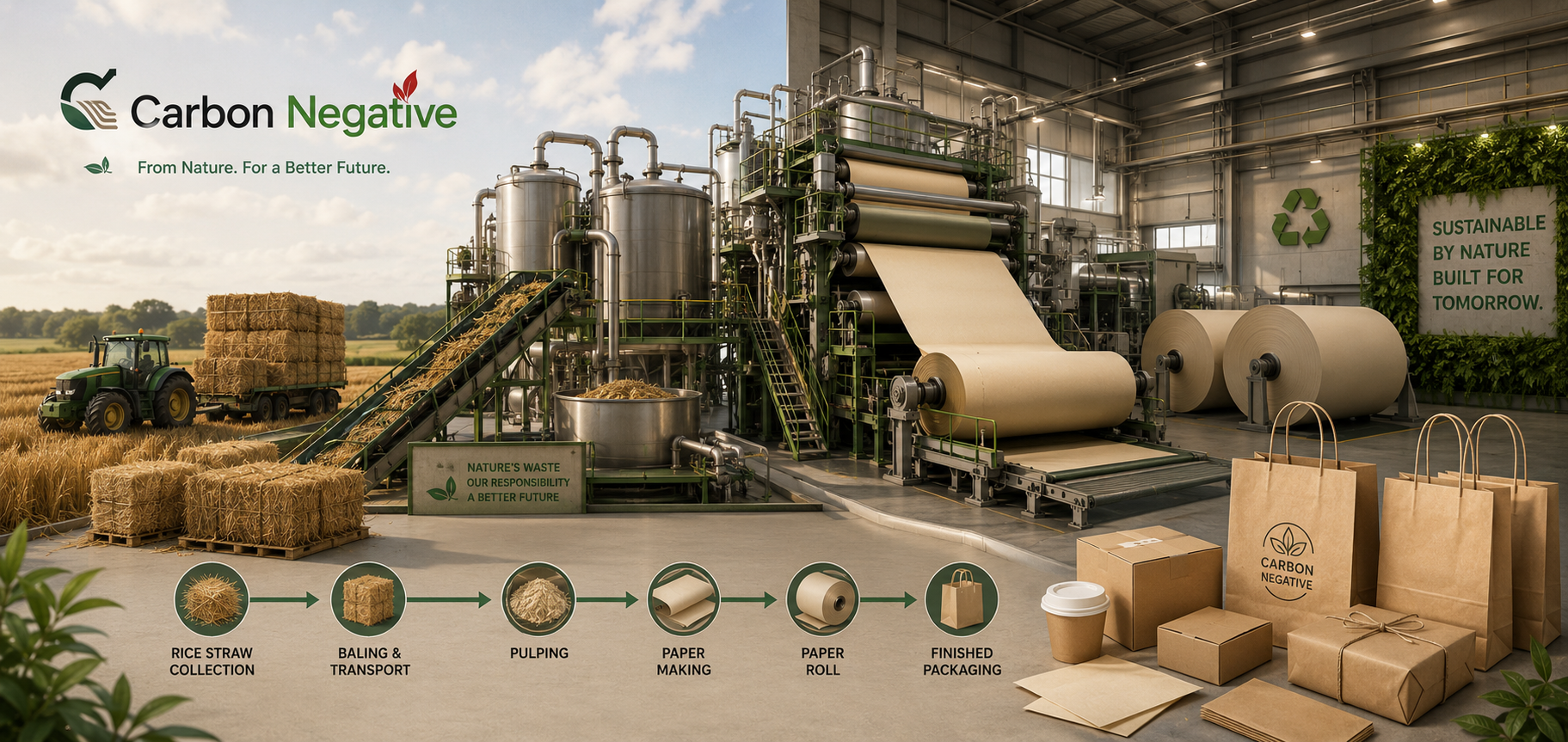
We convert agricultural waste into a premium industrial raw material
Rice straw contains valuable cellulose fibers that can replace virgin wood pulp and petroleum-based plastics — when processed with environmentally responsible chemistry.
Instead of one-time energy generation, our material continues serving society through multiple product life cycles before naturally decomposing.
Plastic is used for minutes — and remains in nature for centuries.
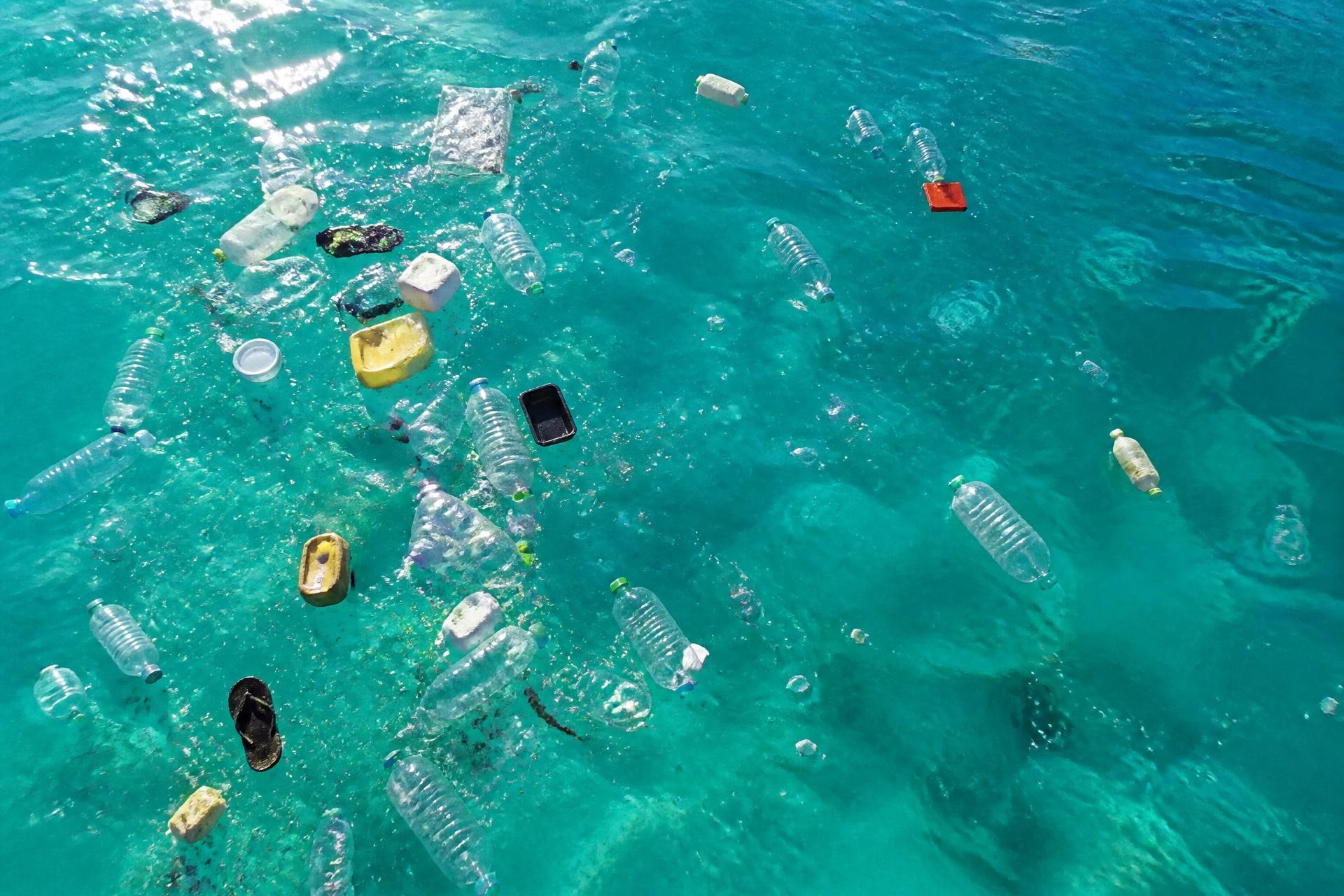
Plastic bags, wrappers, shipping materials, food containers, and protective packaging clog drains, fill landfills, pollute rivers, damage agricultural soil, contaminate groundwater, and reach the deepest oceans.
Even the Arctic contains plastic particles. Plastic has become impossible to ignore.
Microplastics — the invisible threat
Plastic doesn't disappear. It fragments — into microplastics now found in drinking water, sea salt, rain, soil, fish, fruits, vegetables, and even human blood, lungs, and placentas.
Marine life pays the price
Sea turtles mistake bags for jellyfish. Birds feed plastic to their chicks. Whales ingest floating debris. Coral reefs choke under plastic waste. Every bag that escapes waste management can travel through rivers into the sea.

The world does not have a straw problem
It has a materials problem
Packaging is one of the largest manufacturing industries on Earth. If sustainable materials outperform plastic on cost, performance and scalability, they become the foundation of an entirely new industrial ecosystem.
Sustainable packaging
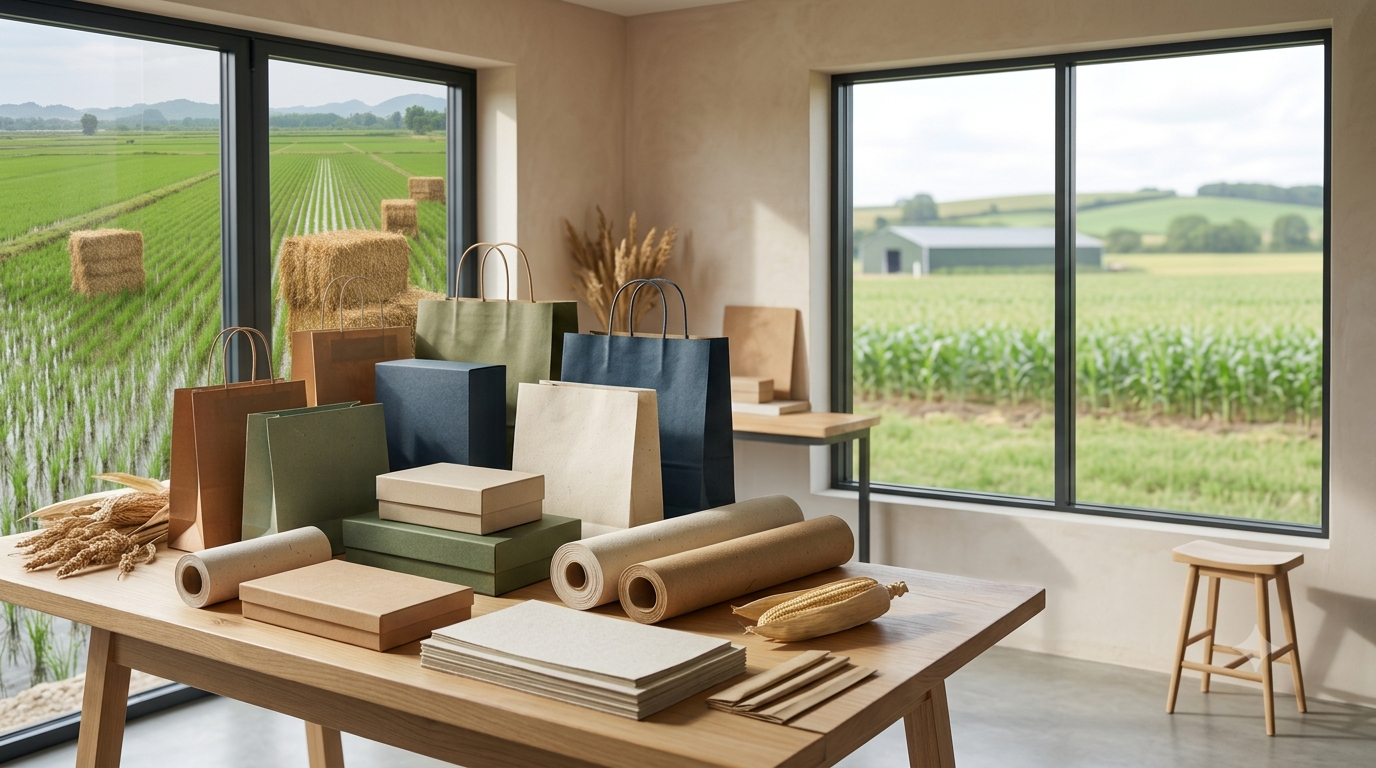
Paper bags
Food containers
Shipping boxes
Industrial wrapping
Premium retail
Luxury packaging
Cosmetic packaging
Pharmaceutical packaging
E-commerce packaging
Stationery
Molded fiber products
Global brands — Amazon, Flipkart, Apple, Nike, Adidas, Puma and many others — have publicly committed to reducing packaging waste. This transition creates one of the largest industrial opportunities of the coming decades.
Value for every stakeholder
Earn additional income from agricultural residue instead of burning it.
Premium sustainable packaging that supports ESG goals and reduces plastic dependence.
Safer biodegradable products that reduce long-term environmental pollution.
Cleaner air, less open burning, lower healthcare burden, better farmer income.
Less plastic, less smoke, less deforestation. Cleaner air, water, and soil.
One raw material Multiple benefits
Most solutions solve only one problem. We solve multiple interconnected problems through one circular value chain.
- Agricultural waste → industrial raw material
- Farmers gain new income
- Plastic demand decreases
- Air pollution decreases
- Pressure on forests decreases
- Carbon emissions decrease
- Businesses obtain sustainable packaging
Agricultural waste should never be burned. It should become the raw material of the next industrial revolution
tons of parali diverted / year by 2030
millions of tons of GHG emissions prevented
replacing conventional packaging at scale
We are not building another paper company. We are building the infrastructure for a circular bioeconomy — where waste becomes wealth, pollution becomes opportunity, and sustainability becomes profitable.